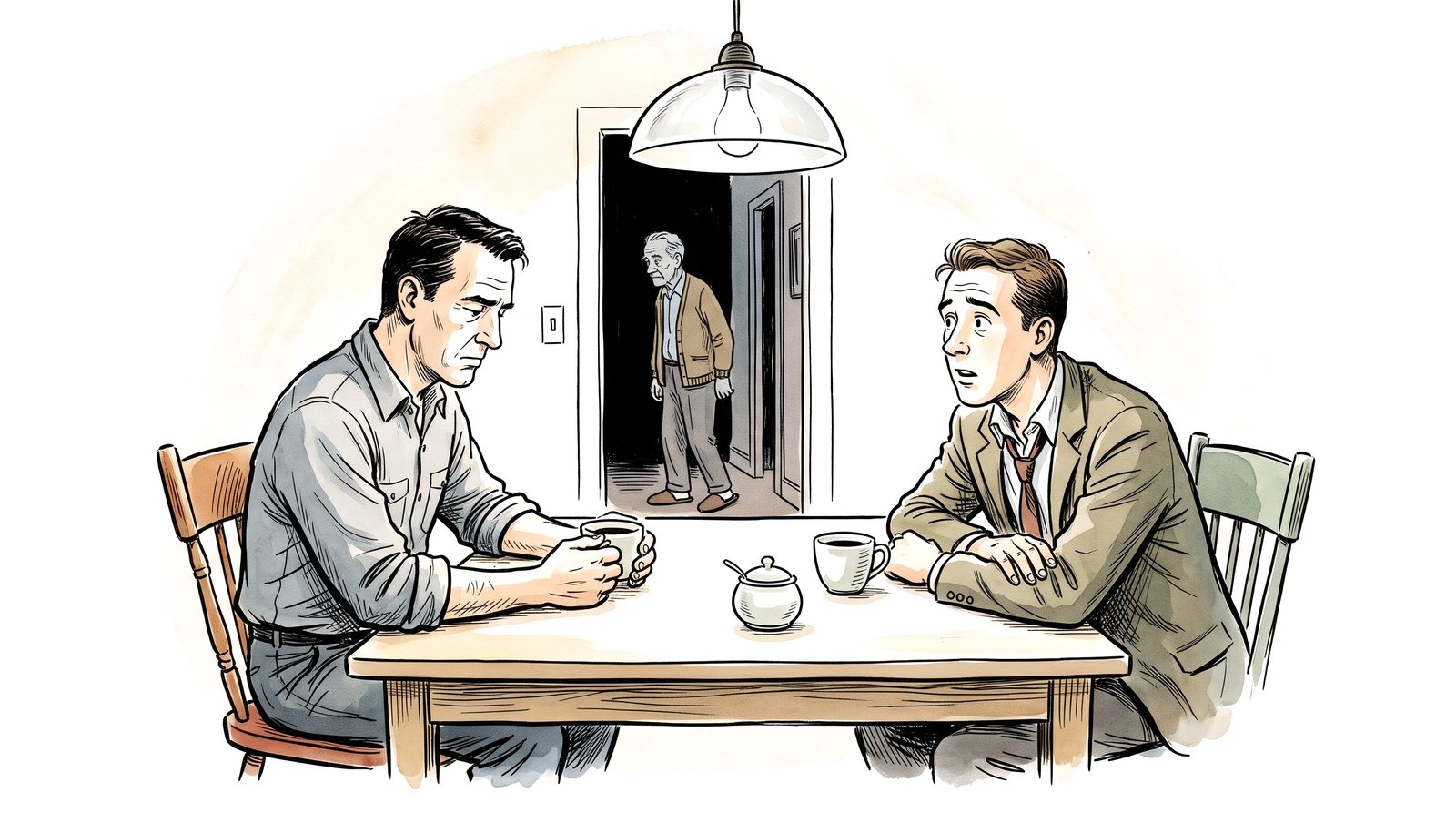
Consider The Good Son, a fictional story about two brothers and their father’s family business. The older brother has spent years keeping the business alive. The younger brother left town, took his share of the money, and built a life elsewhere.
Now the younger brother is coming home. Their father is so excited that he closes the business early to celebrate, something he once refused to do for his granddaughter’s birthday.
The older brother remembers the excuses his father made when he asked to close early for his daughter’s birthday. He’d had to explain why Grandpa couldn’t come.
Now imagine spending several pages preparing for the brothers’ reunion. The older brother rehearses what he might say. He promises himself he won’t start an argument. He watches his father get ready for the visit.
Then his brother arrives.
And the narration gives us this:
Later that night, the brothers talked about the years they had spent apart. It was difficult, but they finally began to understand each other.
And just like that, the conversation is over.
We’ve spent pages getting to this conversation, and now we’re hearing about it after the fact.
Summary isn’t a failure of craft. Sometimes it’s exactly what a story needs. But when you build anticipation for a moment, you ought to consider whether the reader deserves to experience it.
The scene we were promised
In The Good Son, the brothers’ reunion matters because we already know what each man brings into the room. The older brother wants someone to acknowledge what staying has cost him. The younger brother wants to visit without being punished for leaving.
A summary can report that they reached an understanding. It can’t easily reproduce the uncertainty of getting there. Consider a brief version of the encounter:
“Dad closed early for you,” the older brother said.
“I didn’t ask him to.”
“He wouldn’t close for my daughter’s birthday.”
“That’s not my fault.”
“I know.”
“Then why are you telling me?”
“Because somebody had to stay.”
His brother looked at him. “I thought you wanted to.”
The older brother didn’t answer.
The younger brother thinks staying was a choice. Until this moment, the older brother has treated it as an obligation. His silence gives us time to wonder whether he’s angry at his brother for saying it, or because he might be right.
We can leave the argument there, with the older brother unable to answer a question he hasn’t seriously asked himself.
What changes while we’re watching?
A useful test for a scene is simple: What can the reader experience here that a summary would only report?
His silence doesn’t settle anything. We don’t yet know whether he’ll defend the years he spent at the shop or begin to question them. If we write, “The brothers realized they had misunderstood each other,” we remove that uncertainty. We give the conclusion without the moment that makes it interesting.
Of course, not every scene needs a revelation. A refusal, a small decision, or a new detail that makes the reader uneasy may be reason enough to stay. How long you stay depends on how the moment unfolds. The brothers’ exchange might need only a page; another scene could sustain suspense for a chapter.
Choosing a scene is not quite the same as following “show, don’t tell.” You can show us the dust on the counter, the chipped coffee mug, and the older brother’s clenched jaw and still have chosen the wrong moment to dramatize. You can tell us that eleven years passed and make exactly the right choice.
Before spending a paragraph on the room, make sure the conversation deserves a scene.
Scene and summary can cover the same event, but they give the reader different access to it. One lets the encounter unfold; the other tells us what happened and moves ahead.
Consider another morning at the shop. A delivery is late, and the older brother spends an hour rearranging the schedule. If the disruption changes nothing, the reader probably doesn’t need to watch him make phone calls.
But suppose his father expects him to stay late, and he’s promised to attend his daughter’s school concert. Now he has to decide whether to disappoint her or tell his father no.
That choice might deserve a scene, especially if he does something he’s never done before and leaves the shop.
When summary does the better job
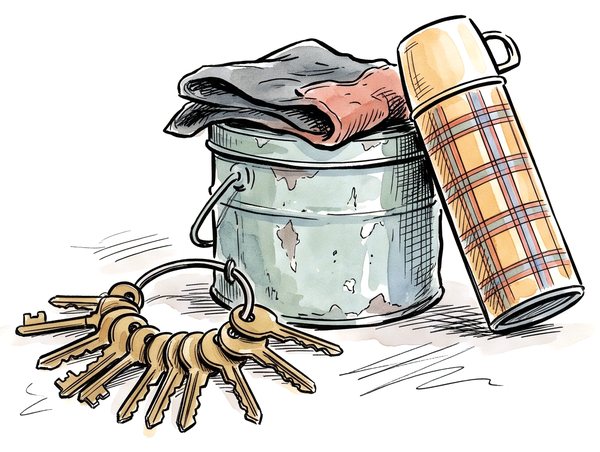
Most mornings at the shop look alike. The older brother opens up, checks deliveries, handles invoices, and locks the door at night.
If we’re establishing how long he’s carried the business, following him through another ordinary shift won’t tell us much.
One sentence can do it: “For eleven years, he opened the shop before sunrise and stayed until the last order was finished.” Now we know the routine well enough to recognize what it means when he finally breaks it.
Or imagine the brothers have the same argument every holiday. If the repetition is the point, we may not need to hear it again. “They spent Thanksgiving arguing about the business, as they always did” can do more work than another three pages of familiar accusations.
Summary also handles transitions and repeated behavior, especially when the pattern matters more than any single occurrence. A novel that dramatizes every disagreement can spend so long on familiar ground that the consequential scenes lose their force.
Think of the difference between hearing that the brothers have avoided each other for six months and watching one brother cross the street to avoid the other. The first gives us duration. The second gives us a particular act of avoidance. The choice depends on whether the duration or the particular act matters more.
If the story needs us to understand how long the silence has lasted, summarize. If it needs us to see the older brother make a choice he can’t quite admit to himself, stay with him on the sidewalk.
Sometimes the missing scene is the point
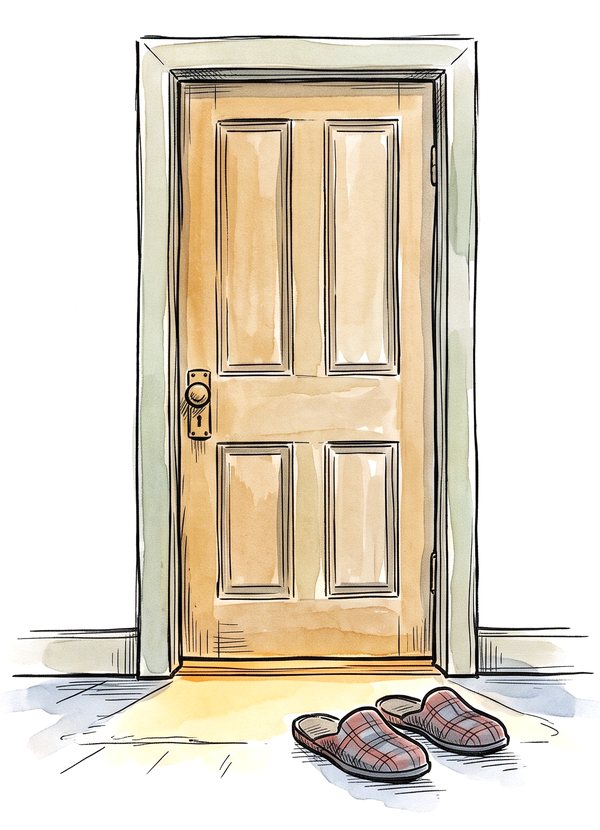
An important exchange can also be more effective when we never hear it.
Suppose The Good Son is told from the father’s point of view. He doesn’t hear the brothers’ private conversation. The next morning, he notices that both sons are unusually quiet around him.
Now the missing exchange creates a question. The father’s ignorance is part of the story, and the reader shares it.
Or suppose the novel begins months after the reunion. The older brother keeps remembering a single remark his sibling made. We learn what happened gradually because the aftermath is the real subject.
If you withhold a scene to create mystery, distance, or a meaningful gap in perspective, you’re making a craft choice. If you skip it because you’re eager to get to the next chapter, you may be walking past the moment you spent pages preparing.
Find the moment you skipped
Look through your draft for a sentence that reports an important event after it happened:
They argued for hours.
She finally told him the truth.
After the meeting, he decided to leave.
The conversation changed everything.
Choose one of those sentences and look at the pages around it. Look at what comes before it. Have the characters worried about the event, avoided it, or prepared for it?
Then look at what follows. Does the event alter a decision, a relationship, or somebody’s understanding of what happened? If so, try writing the moment as a scene. Start near the point of pressure. Give the character an immediate objective, and let the encounter unfold without forcing it toward the conclusion your summary promised.
Then compare. Does the scene reveal something the summary couldn’t? Does it allow uncertainty or a change in understanding that matters to the reader?
If it takes five pages to convey what the summary handled in one paragraph, keep the summary.
You can also run the test in reverse. Find a scene that feels sluggish and ask whether the reader is waiting for a decision that never arrives. Maybe you’ve written every minute of the older brother’s commute, including the traffic lights and the radio. Unless something changes during that drive, the entire trip may need one sentence.
Try cutting the scene to a summary, then read the pages around it. Did you lose an important choice or discovery? Or did the story finally start moving?
Cutting a scene you spent an afternoon getting right is frustrating. But a convincing scene can still be in the wrong place. It might not belong in the novel at all.
Let the reader into the right room
Fiction lets you spend a chapter on thirty seconds and cover ten years in a paragraph. The difficult part is deciding where to spend that time.
If you’ve spent pages bringing the brothers to a confrontation, give the reader a chance to experience what happens when they finally speak. Stay long enough for the exchange to matter, then move on.
And if the story is stronger without that conversation, leave it off-page deliberately. The reader should feel the effect of what’s missing, not the absence of something you forgot to write.