Who’s Telling This?
A Ten Bad Pages Creative Writing Guide
$7
How to choose a point of view, control what readers know, and stop hopping between heads.
Same truck, same awkward Friday, same two men. Who tells it changes everything.
A Ten Bad Pages Creative Writing Guide
$7
How to choose a point of view, control what readers know, and stop hopping between heads.
Same truck, same awkward Friday, same two men. Who tells it changes everything.
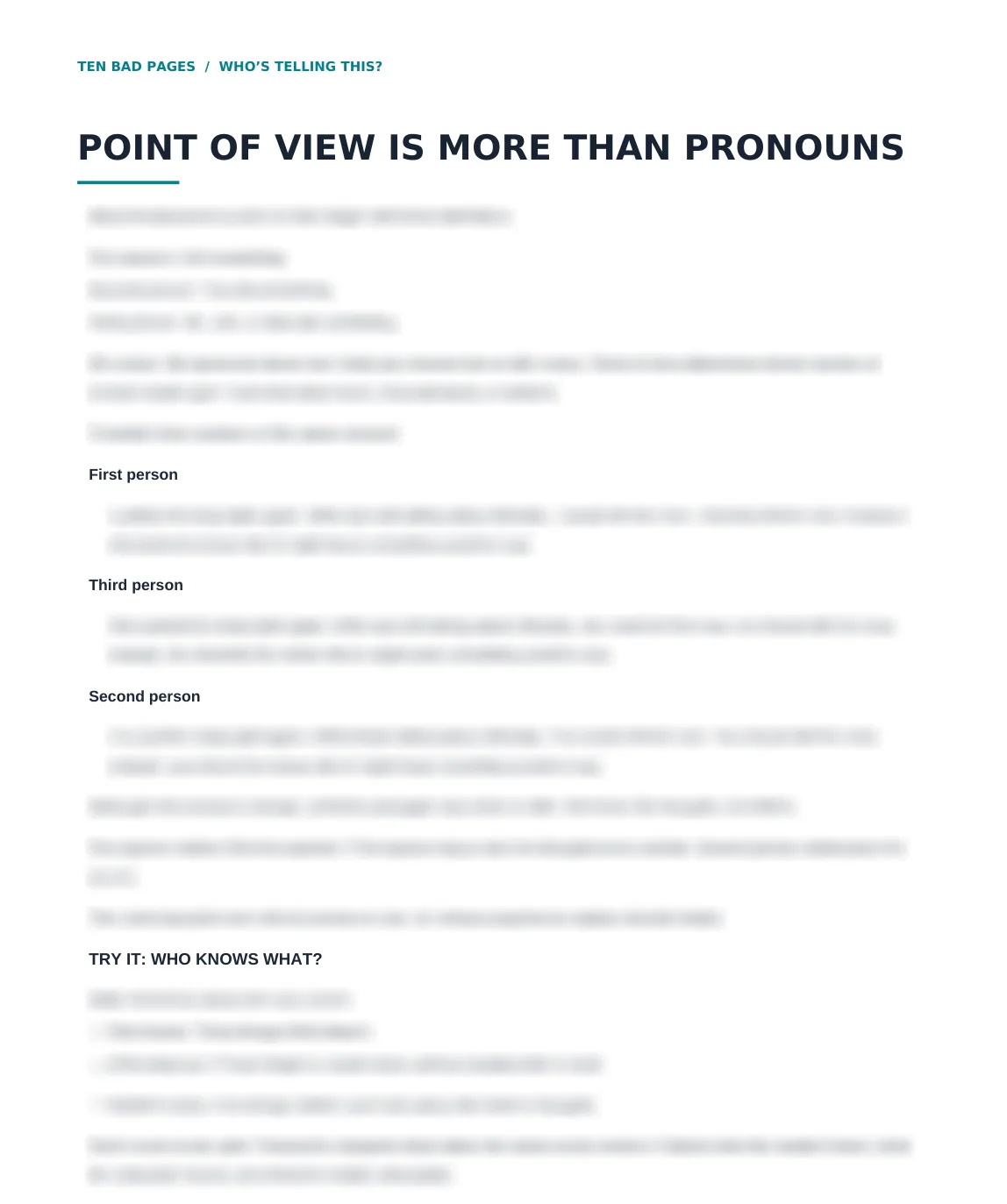
Most introductions to point of view stop at first, second and third person. The real questions come after: whose head are we in, what can this narrator know, and what happens when you wander into somebody else’s thoughts halfway through a scene?
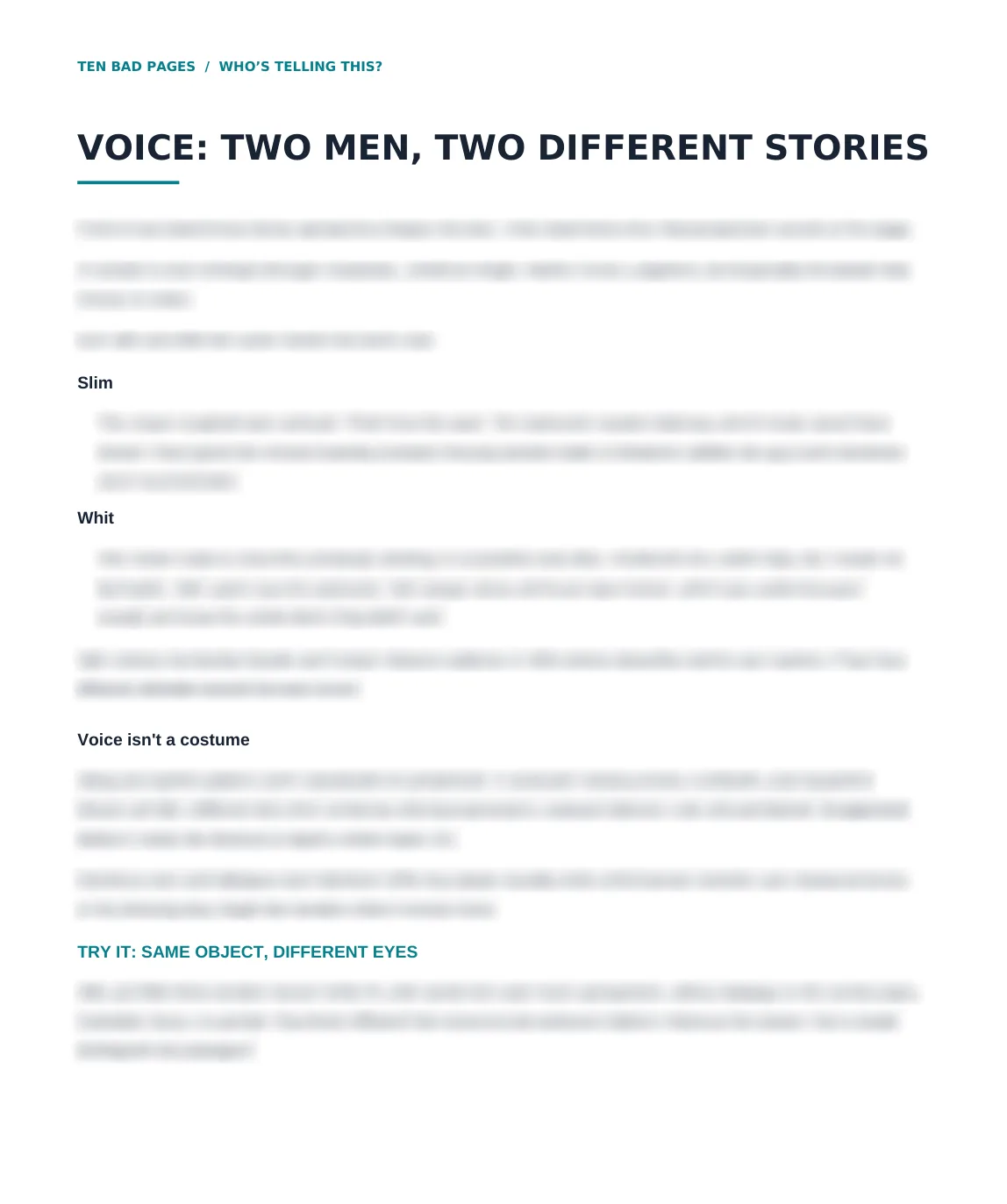
Who’s Telling This? follows one small scene all the way through: two landscapers loading a truck on a Friday, and one of them hasn’t said he’s quitting. You’ll tell it from inside Slim’s guilt, from Whit’s confusion and from a narrator who knows more than both, and see how each choice changes the story.
It works with whatever your professor assigns. Follow your professor’s format, and your professor’s AI policy always wins.
First person, close third and omniscient, and what each one lets the reader know.
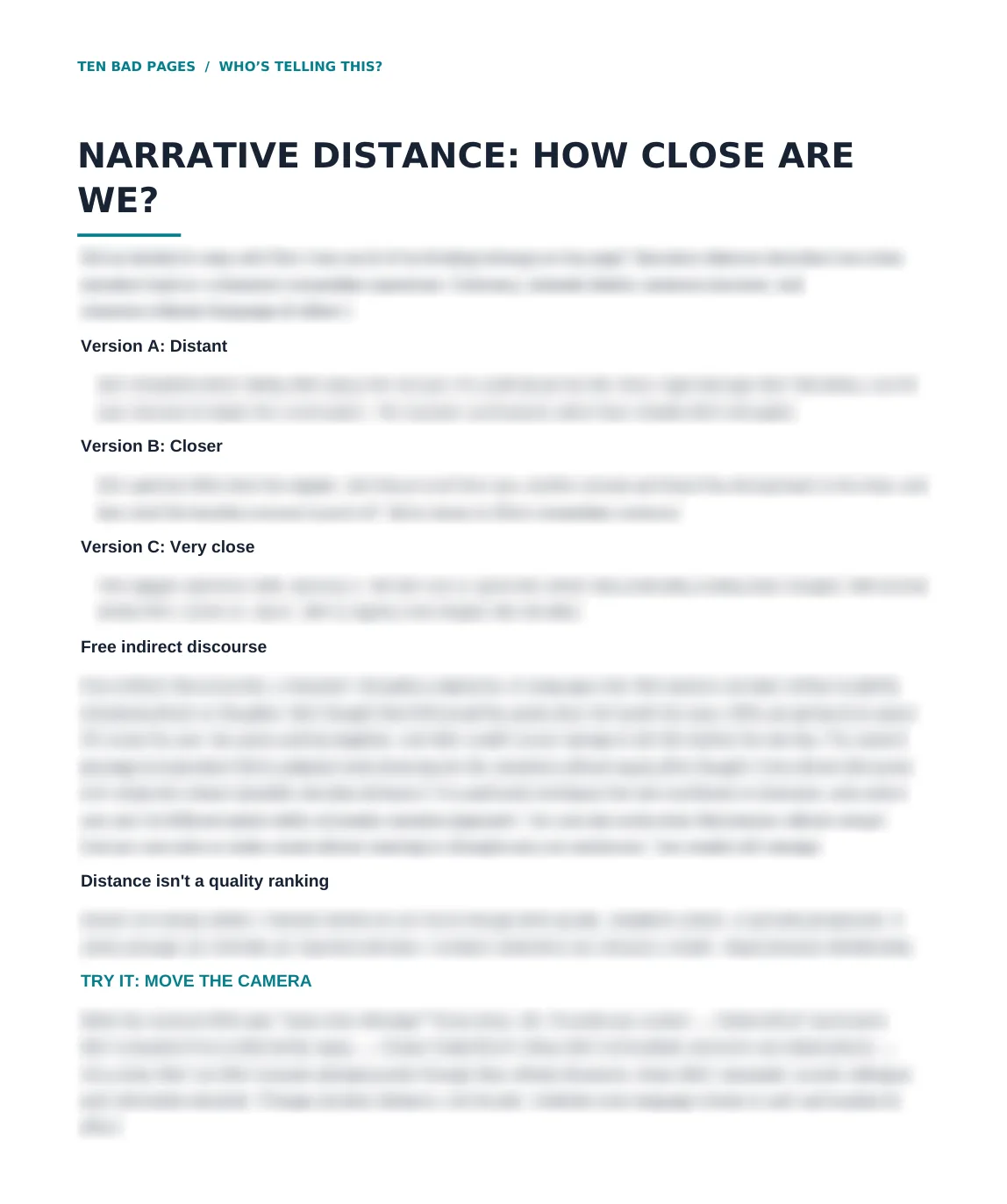
How close the camera sits, free indirect discourse, and voice that isn’t a costume.
Find the leaks and fix them, or commit to a narrator who’s allowed to know more.
Use AI to flag point-of-view slips, then decide for yourself which ones are mistakes.
Purchase includes one printable PDF. It’s a guide, not a fillable workbook: the exercises go in your notebook or writing app.
Download right after checkout, and we email you the links too — they work for 30 days. Lose them? Email hello@tenbadpages.com and we'll send more. Not what you expected? Reply to your receipt within 30 days and we'll refund it.